Regulation
Bali banned plastic water bottles under one litre from 2025, building on the 2018 single-use plastic ban. For hotels and villas that means refill stations and glass - and, unusually for a regulation, it saves money.
6 min read · 2026-09-15
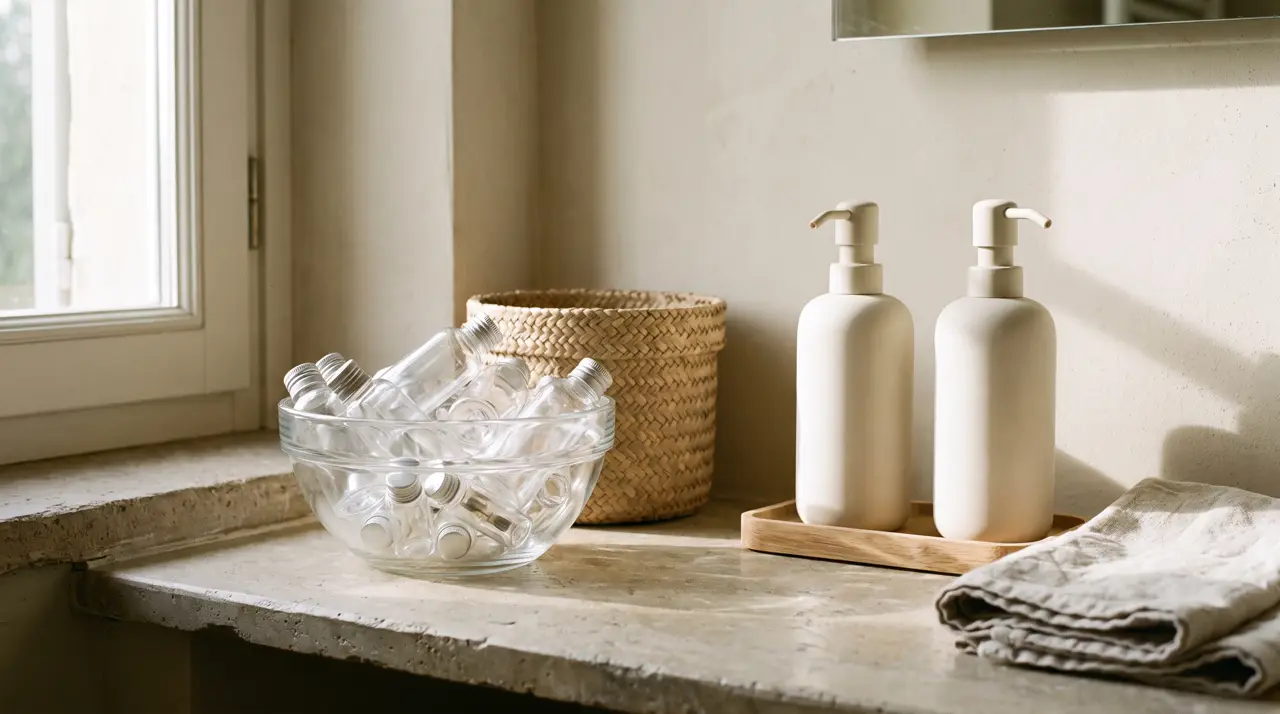
Regulations rarely improve a P&L, but this one does. From 2025 the Bali Provincial Government bans plastic water bottles under one litre across the province (Bali Provincial Government / SSEK, 2025), extending the 2018 ban on single-use plastic bags, straws and styrofoam. Hospitality is squarely in scope: the bottle on the nightstand and the mini shampoo in the shower are exactly the formats the rules target. The properties that moved early discovered the punchline - refill formats are cheaper than the minis they replace.
Note what the rules do not ban: large refill containers, glass, aluminium, paper and plant-based packaging all remain legal. The regulation targets formats, not categories - nobody is asking a hotel to stop serving water or shampoo, only to stop serving them in sub-litre plastic. That distinction is the whole migration plan: same products, compliant vessels.
Switching amenities from single-use minis to dispenser and refill systems cuts amenity spend by 25-40 percent (MarketIntelo, 2025). The format is not a niche: the global refillable hotel amenities market is projected to grow from US$1.2B in 2025 to US$2.3B by 2034 (MarketIntelo, 2025). Minis are dying globally; Bali just set a date. Against the US$4-8 per occupied room benchmark for room supplies (Reeco, 2025), refills are one of the few line items you can cut while upgrading the guest experience.
In practice, checks are visual and guest-facing: the minibar, the nightstand, the bathroom shelf, the pool bar. A room with glass water bottles and refill dispensers passes at a glance. A storeroom with a leftover pallet of plastic minis invites questions. If you run multiple properties across Bali, standardise one compliant room setup and photograph it - the photo becomes your training document and your evidence.
Budget the switch as a one-time dispenser purchase plus a cheaper running cost. Per our price list, a ceramic or stone dispenser set runs IDR 0.45-1.6 juta per bathroom and a 5 L cosmetic refill IDR 0.35-0.75 juta per canister - the pricing page has the full ranges, and for hotels and resorts we quote the migration per wing so housekeeping converts floor by floor without a single out-of-stock bathroom.
Guests increasingly read refill dispensers and glass water as a quality signal, not a cost cut. The same change that satisfies the inspector photographs beautifully in the booking listing.
The ban is province-wide and format-based, not size-based. A 2-bedroom villa serving plastic minis has the same problem as a resort, just fewer rooms of it.
Yes - crate rotation makes it a swap, not a storage problem. Per our price list, glass mineral water runs IDR 90,000-200,000 per case of 12, and disposal costs disappear.
Use it in staff areas and back of house while migrating guest rooms first - the guest-facing side is what the rules and the inspections actually test.
Keep reading
Coffee, tea and water are the first thing guests touch. How local specialty beans and glass water turn cents per night into review points.
View →
Everything a new villa needs before the first guest: room-by-room quantities, budget tiers and the order-by dates that save the launch.
View →
Daily and weekly dosing, storm response, and how much chlorine a Bali pool really eats. The short guide an owner can hand to staff.
View →Questions?
Tell us about the property - we reply with a stock list, unit prices and delivery dates.